


Retaining Wall vs. Regrading: Which Solution Fits Your Sloped Property
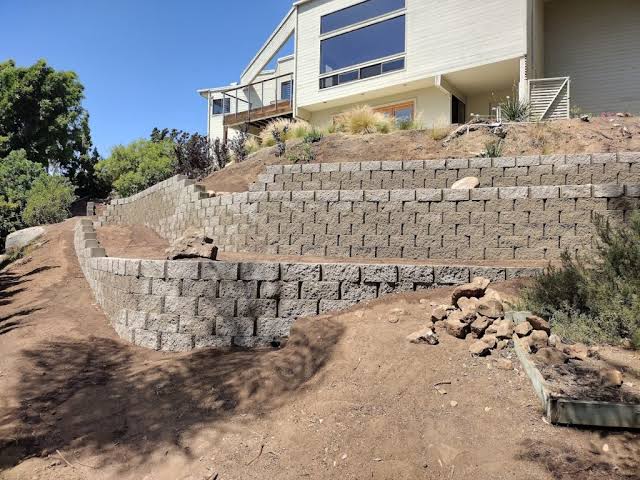
Properties with significant elevation changes present homeowners with a choice: install a retaining wall to manage the slope, or regrade the land itself to create a more gradual, manageable transition. Understanding which solution fits your specific situation can save you from choosing an approach that doesn't actually solve your underlying problem.
What Regrading Involves
Regrading reshapes the land itself, adjusting the slope, contour, and elevation of a property without adding a structural wall. This approach works by spreading the elevation change over a longer, more gradual distance rather than managing it abruptly with a vertical structure.
What a Retaining Wall Involves
A retaining wall holds back soil at a steeper elevation change than natural, unsupported soil could maintain on its own, allowing for a more abrupt transition between different elevation levels while preventing erosion and soil movement.
When Regrading Makes More Sense
Regrading is often the better solution when a property has enough available space to spread out the elevation change gradually, when the slope isn't severe enough to require structural support, and when a homeowner wants to avoid the ongoing maintenance and potential future repair considerations that come with a retaining wall.
When a Retaining Wall Makes More Sense
A retaining wall becomes necessary when space constraints don't allow for a gradual slope, when the elevation change is too severe for simple regrading to safely address, or when specific areas of a property need a defined, structural boundary between different elevation levels, such as separating a raised patio area from a lower yard.
Cost Considerations
Regrading is often less expensive than installing a retaining wall, since it doesn't require the structural materials, engineering, and construction involved in wall installation. However, if space constraints make regrading impractical for your specific slope, a retaining wall may be the only realistic solution regardless of cost differences.
Long-Term Maintenance Differences
Regraded land, once properly established with appropriate ground cover, generally requires less ongoing maintenance related to the elevation change itself compared to a retaining wall, which requires monitoring for cracking, leaning, or drainage issues over time, as covered in more detail elsewhere regarding retaining wall failure.
Drainage Considerations for Both Options
Both regrading and retaining wall installation need to properly address drainage, directing water away from structures and preventing erosion. Regrading typically incorporates drainage into the overall slope design, while retaining walls require specific drainage provisions behind the wall itself to prevent water pressure buildup that can lead to eventual failure.
Combining Both Approaches
Some properties benefit from a combination approach, using a retaining wall to manage the most severe portion of an elevation change while regrading the remaining, less severe slope. This hybrid approach can sometimes offer the most practical and cost-effective solution for complex terrain.
Getting a Professional Assessment
Because the right choice depends on your property's specific slope, available space, soil conditions, and how the area will be used, a professional assessment is the most reliable way to determine whether regrading, a retaining wall, or a combination approach fits your situation.
How This Fits Into Broader Land Preparation
Whether you choose regrading, a retaining wall, or both, this work typically falls under broader land preparation services, particularly if it's connected to other property changes like new construction, landscaping, or addressing a property you're preparing for a different use.
Tips for Deciding Between Retaining Walls and Regrading
- Get a professional assessment of your specific slope and available space before deciding.
- Consider long-term maintenance implications alongside upfront cost differences.
- Discuss drainage planning specifically, regardless of which solution you choose.
- Ask whether a hybrid approach might offer the most practical solution for complex terrain.
Whether your sloped property calls for a retaining wall, simple regrading, or some combination of both, addressing the elevation change properly protects your property from erosion, drainage issues, and structural problems down the road.

Dealing with a sloped property and unsure which solution fits? Schedule your free estimate and get expert guidance for your specific terrain.
might help manage overall project cost and timeline.


