


How Concrete Thickness Affects Removal Difficulty and Cost
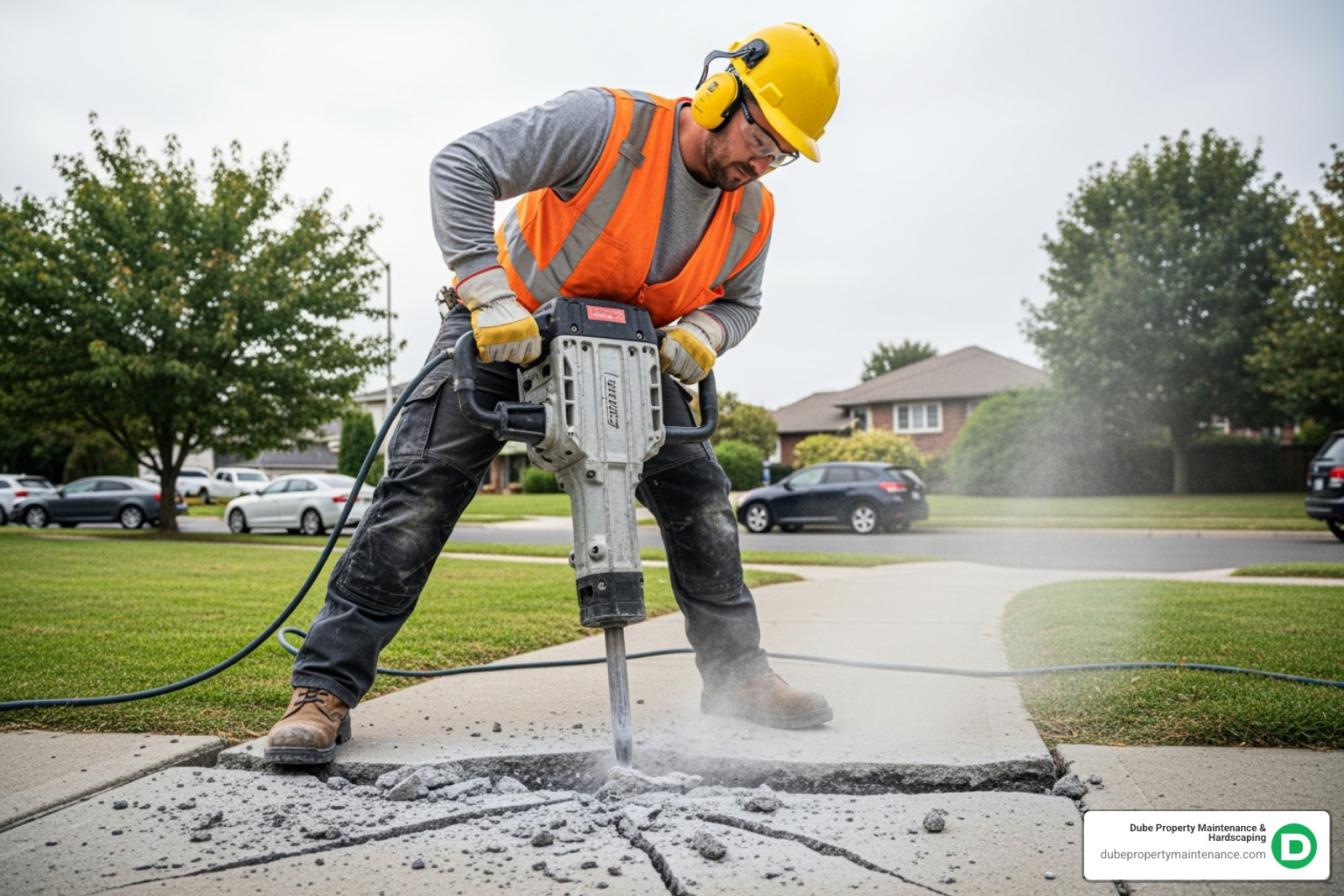
Not all concrete is created equal, and thickness is one of the most significant factors affecting how difficult, time-consuming, and costly a concrete removal project turns out to be. Understanding this relationship helps DFW homeowners better interpret their concrete demolition estimates.
Why Thickness Varies So Much
Different concrete applications are designed with different thickness standards based on their intended use and load requirements. A standard walkway might be relatively thin, while a driveway designed to support vehicle weight is typically thicker, and a foundation slab supporting an entire structure is thicker still.
Typical Thickness by Application
Walkways and sidewalks are often among the thinnest concrete applications, since they only need to support foot traffic. Patios fall into a similar range, sometimes slightly thicker depending on design. Driveways are generally thicker to accommodate vehicle weight, particularly if designed for larger vehicles. Foundation slabs and structural applications are typically the thickest, given the load-bearing requirements involved.
How Thickness Affects Breaking Difficulty
Thicker concrete requires more force, and often more time, to break apart compared to thinner slabs. This isn't a simple linear relationship, doubling the thickness doesn't just double the effort, since thicker concrete also tends to be more heavily reinforced, compounding the difficulty.
The Relationship Between Thickness and Reinforcement
Thicker concrete applications typically include more substantial reinforcement, rebar or wire mesh, embedded within the material, since thickness and reinforcement work together to provide appropriate structural strength for the application's intended use. This means thicker concrete usually means more embedded material requiring separation during removal.
How This Affects Equipment Selection
Contractors often adjust their equipment approach based on expected concrete thickness, sometimes using heavier breaking equipment for thicker driveways or foundation slabs compared to what's needed for thinner walkways or patios.
How This Affects Debris Volume
Thicker concrete naturally generates more material volume once broken up, even across the same surface area, compared to thinner concrete. This affects hauling requirements and, correspondingly, disposal or recycling costs.
Why an Accurate Thickness Assessment Matters for Estimates
Because thickness so significantly affects the labor, equipment, and material handling involved, an accurate assessment during your property evaluation helps ensure your estimate genuinely reflects your specific project's scope, rather than assuming a generic thickness that might not match your actual concrete.
How Homeowners Can Sometimes Estimate Thickness Themselves
While a professional assessment is more reliable, homeowners can sometimes get a rough sense of concrete thickness by examining an exposed edge, if one is accessible, though this isn't always fully representative of thickness throughout the entire slab, particularly for older concrete that may have inconsistent original installation.
When Thickness Estimates Turn Out to Be Wrong
If a concrete slab turns out to be significantly thicker than initially assessed, once demolition begins, this can be a legitimate cause of the unexpected cost adjustments discussed in more detail elsewhere, underscoring why thorough initial assessment matters even though some uncertainty about exact thickness throughout a slab is sometimes unavoidable.
Foundation Slabs and Basement Considerations
As covered regarding foundation removal and basement demolition, foundation-grade concrete is typically the thickest and most heavily reinforced concrete a homeowner might need removed, which is part of why these projects tend to cost more than standard driveway or patio removal of similar surface area.
Tips for Homeowners Regarding Concrete Thickness
- Understand that concrete thickness significantly affects both the labor involved and your overall project cost.
- Ask your contractor how they assess thickness during your property evaluation.
- Recognize that thicker concrete, like driveways or foundations, typically costs more to remove per square foot than thinner applications.
- Don't be surprised if concrete of unknown age or history turns out to have inconsistent thickness throughout.

Understanding how concrete thickness affects removal difficulty and cost helps you interpret your specific project's estimate with a clearer sense of what's actually driving the pricing for your particular slab.
Ready to find out what your specific concrete removal project will involve? Schedule your free estimate and get an accurate assessment for your property.


